
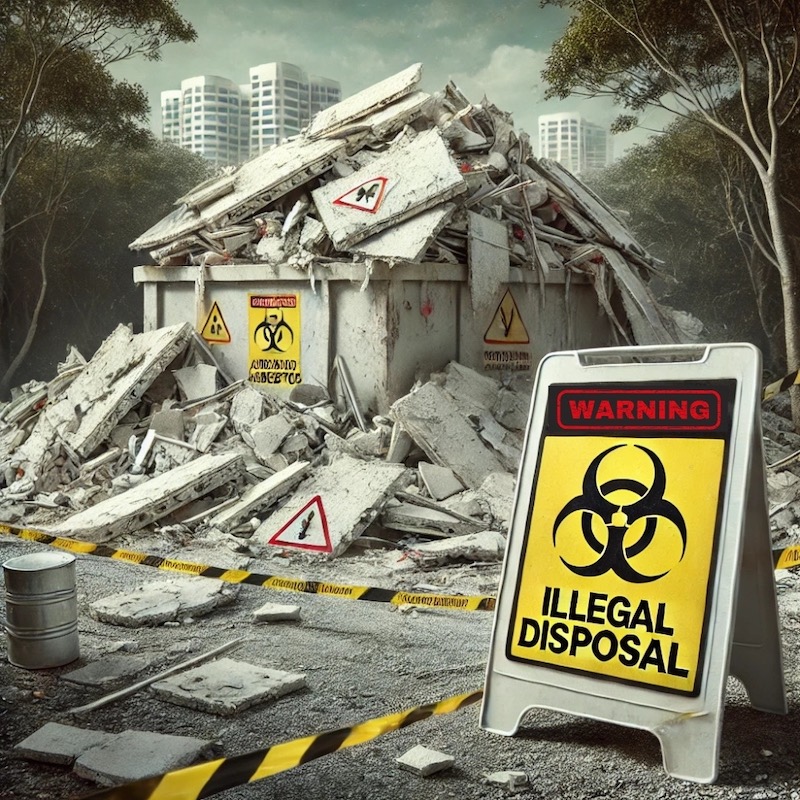
Is it Illegal to Dispose of Asbestos with Household Waste
Is it Illegal to Dispose of Asbestos with Household Waste? YES. If you’re carrying out a renovation or clearing out an older building, you may come across asbestos-containing materials (ACMs). While it may seem convenient to dispose of these materials along with your regular household waste, it’s essential to understand that this is not only dangerous but illegal in Northern Ireland.
Asbestos was widely used in construction before its ban in 1999 due to its heat resistance, durability, and insulating properties. It can still be found in many older buildings, including homes, schools, and workplaces. When disturbed, the fibers can become airborne, and inhaling them poses severe health risks, such as mesothelioma, lung cancer, and asbestosis. Because of these dangers, the Northern Ireland Environment Agency (NIEA) closely monitors the disposal of asbestos to ensure it is handled correctly.
Why You Shouldn’t Dispose of Asbestos with Household Waste
- Health Risks
Asbestos fibers are microscopic, making them incredibly dangerous when inhaled. If asbestos-containing materials are improperly handled, the fibers can be released into the air, leading to long-term health problems. The risks increase significantly when household waste is mixed with asbestos, as the materials are not typically sealed or contained, allowing fibers to escape into the environment. - Environmental Impact
Improper disposal of asbestos can result in contamination of the land, water, and surrounding areas. When asbestos is not contained in a controlled setting, it can leach into the environment, potentially affecting wildlife and local ecosystems. - Legal Implications
Disposing of asbestos with household waste is not only dangerous but illegal. The NIEA regulates the movement of hazardous waste in Northern Ireland, including asbestos. When improperly disposed off, the NIEA can issue significant fines for failing to follow proper disposal procedures. Household waste collections are not equipped to safely handle or transport hazardous materials like asbestos, which is why only licensed disposal sites are authorised to accept it.
The NIEA’s Role and Enforcement
The Northern Ireland Environment Agency is responsible for enforcing strict regulations on the disposal of hazardous waste. They monitor the movement of asbestos and ensure that it is transported and disposed of safely. If you attempt to dispose of asbestos improperly, whether at a local landfill or through waste collection services, you could face heavy fines. These fines are issued to hold individuals and businesses accountable for the improper disposal of hazardous waste, which can have serious consequences for public health and the environment.
What if I Discover Asbestos in my Home?
So, what should you do if you find asbestos in your home or business? Here’s what you need to know:
- Don’t Disturb It
If you suspect the presence of asbestos, do not attempt to remove or disturb it yourself. Asbestos fibers are most dangerous when airborne, so any attempts to drill, cut, or remove the material could release harmful fibers into the air. - Hire a Licensed Professional
Asbestos removal requires specialised training and equipment. It is essential to hire a licensed contractor to safely remove and dispose of asbestos. Professionals are equipped to handle the material without putting themselves or others at risk. They will also ensure the asbestos is disposed of in accordance with NIEA regulations. - Use Approved Disposal Sites
The NIEA has designated licensed sites where asbestos can be disposed of safely. These facilities are equipped to handle hazardous waste and ensure it is disposed off in a way that prevents contamination to the environment.
Safely Disposing of Asbestos
Disposing of asbestos safely requires strict adherence to regulations to ensure public health and environmental safety. Below is the step-by-step process a licensed asbestos removal contractor must follow:
1. Contacting a Licensed Asbestos Removal Contractor
Hire a contractor certified in asbestos removal and disposal. They are trained to handle asbestos-containing materials (ACMs) and follow legal protocols for safe disposal.
2. Pre-Notification and Allocation of a Consignment Number
Before collection and disposal, the contractor submits a pre-notification to the Northern Ireland Environment Agency (NIEA). This notification must be submitted at least three working days before collection.
- The NIEA issues a consignment number, which is used to track and record the asbestos disposal process.
- The pre-notification form includes information such as:
- Property or business address where the asbestos is being collected.
- Type of hazardous material (e.g., chrysotile or amosite asbestos).
- Estimated weight of the material.
- Hazard codes specific to asbestos.
- Date of collection.
- Contractor’s company details, including license information.
3. Removal and Packaging of Asbestos
The contractor safely removes asbestos from the site using specialised tools and protective equipment to prevent fibers from becoming airborne.
- The ACMs are sealed in double-layered bags or containers labeled with appropriate hazard warnings.
- The packaging must meet approved standards to prevent any leaks or contamination.
4. Transportation of Asbestos to an Authorised Facility
- The contractor transports the asbestos to an authorised hazardous waste facility.
- The consignment note accompanies the waste, detailing its origin, type, and destination.
5. Final Disposal and Record-Keeping
At the asbestos recycling facility:
- The asbestos is safely processed and stored in compliance with NIEA regulations.
- The facility signs off on the consignment note, confirming receipt and proper handling.
- Both the contractor and the facility retain copies of the consignment note for at least three years as proof of compliance.
Importance of Following This Process
Failure to follow these steps can result in significant fines and pose health risks to workers and the public. Licensed contractors ensure that the process is carried out safely, legally, and with full accountability under NIEA regulations.
Is it Illegal to Dispose of Asbestos with Household Waste?
At Removerr, we specialise in the safe and efficient removal of external asbestos materials at competitive prices. Whether you’re dealing with garage roofs, guttering, corrugated sheets, soil pipes, flue pipes, or asbestos tiles, we can handle the job with ease and professionalism.
Why Choose Removerr?
- Affordable Prices: As a small, local company, we pride ourselves on offering affordable asbestos removal services for smaller quantities, making it accessible for homeowners, builders, and contractors alike.
- Expertise You Can Trust: With years of experience handling a range of asbestos-containing materials, we ensure that your property is safely cleared of hazardous materials.
- Quick Turnaround: We know time is of the essence when dealing with asbestos. Our team works efficiently to complete the job with minimal disruption.
We Can Help With:
- Garage Roofs: Safely remove and dispose of corrugated asbestos sheets often found on garage roofs.
- External Buildings: Includes asbestos roofing or cladding in sheds, workshops, and outbuildings.
- Soil Pipes, Guttering, & Flue Pipes: Commonly found in older homes, we remove these asbestos cement products safely and efficiently.
Don’t Risk Your Health—Contact Removerr Today!
I hope this article answers the question: Is it illegal to dispose of asbestos in household waste? Hazardous materials like asbestos require expert handling, at Removerr, we’re here to help. For affordable, safe, and fast asbestos removal services, call Andrew on 07434 691 809 or email andrew@removerr.co.uk.
Other articles you may find helpful:

